

Built to Burn
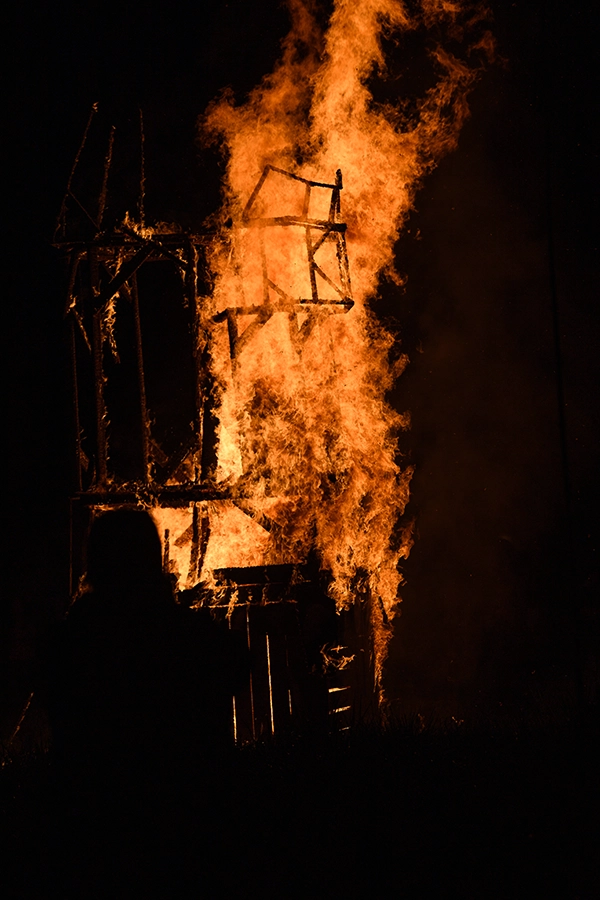
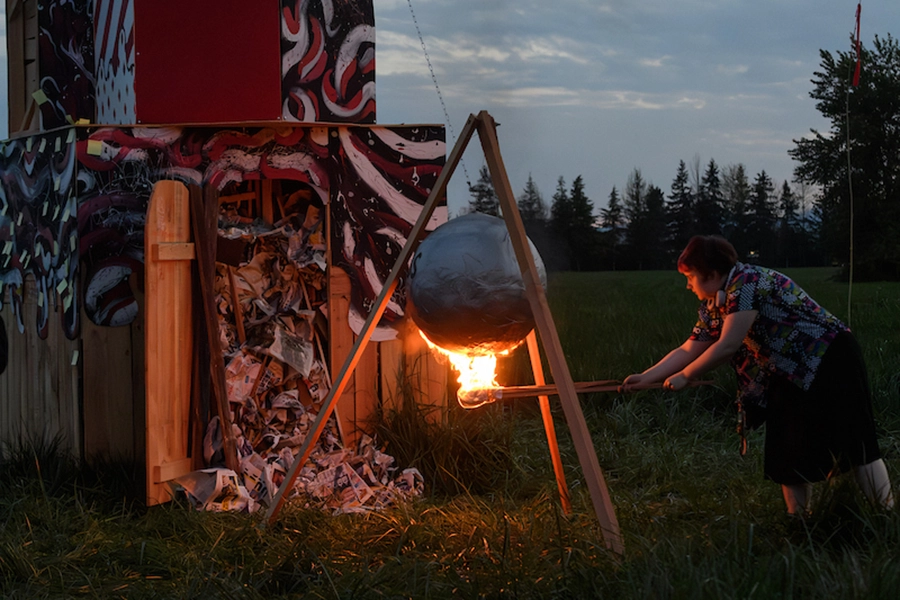
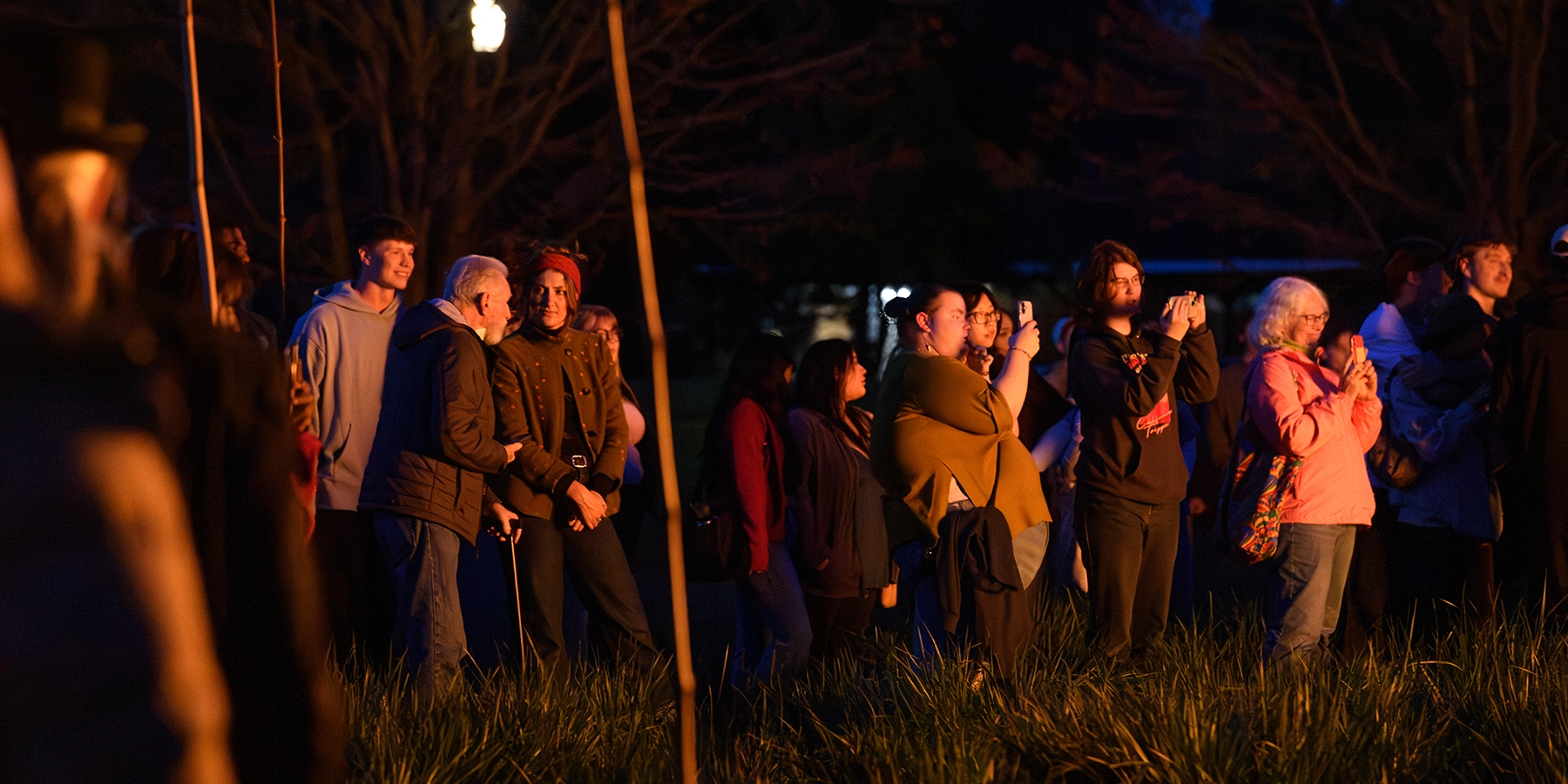
In the fading light of an open field, an unusual but striking structure stands tall. A crowd gathers around it, buzzing with anticipation, and within moments, the structure is engulfed in flames. As spectators watch in awe, a sense of accomplishment and peace settles over Alan Bolanos Gonzalez ’26 and Shepard Smithson ’29, two students who helped bring the project to its short life.
For Shepard, the project is both tradition and invitation.
“Built to Burn is a project that's happened annually for 18 years,” he explained, “Two art classes spend a few months building a structure out of wood that is to be burned.”
What makes it distinct isn’t just the outcome, but the way it brings people together.
“The concept and execution are deeply collaborative,” Shepard said. “It’s also a community event where everyone can contribute by writing on the structure or just by showing up and watching it burn.”
Alan saw that same spirit reflected in the project’s symbolism. To him, the event commemorates the coming of spring, and the act of burning the structure becomes more than a spectacle.
“It was a physical representation of what it means to be free, let go and embrace imperfection,” he said.
Before flames ever touch the structure, there are weeks of uncertainty, iteration and hands-on work. Alan’s role began at the conceptual level.
“My contribution was coming up with ideas with my peers as to what we wanted to portray,” he recalled.
With guidance from instructor Totem Shriver, the group landed on a theme that intentionally embraced imperfection.
“There was a lot of drawing, collaborating and trying to come up with ways we could visualize that overarching theme,” Alan described.
Shepard’s experience was more physical and immediate.
“I painted some of the more abstract paneling on the outside, chopped some of the wood to fill the inside and painted the flag that went on top,” he said.
His responsibilities shifted constantly, reflecting the evolving nature of the build.
“It was kind of a push and pull between what Totem was asking us to do and what we were actually doing,” he explained. “The concept changed so much as we were actively working on it.”
However, that fluidity didn’t come without challenges.
“I was often a bit frustrated when I got attached to part of an idea and someone else decided to do something different, but ultimately, it turned out well,” Shepard said. “I really liked collaborating with everybody on this project.”
Even his final role in lighting the structure on fire added another layer to the project’s meaning.
“I was chosen to light it, which was kind of terrifying but also fun,” he said.
As the structure took shape, so did its meaning. For Alan, that meaning wasn’t immediate.
“At first it just felt like another project,” he said. But knowing it would all be burned changed that.
“It kind of sucked thinking that something we spent four weeks creating would be burned down,” he admitted.
Still, that realization led to something deeper.
“The project became a symbolic gesture about letting go and not getting hung up on things that may trouble us,” Alan shared. “It motivated me to not worry about how perfect the sculpture was but rather to enjoy the process of creating something despite its imperfections.”
Shepard also connected with that idea.
“I knew from the start that this was going to be the only possible outcome,” he said.
Rather than discouraging him, that certainty became freeing.
“It made it feel more like something I was doing for fun rather than ‘work,’” he described. “There’s a lot of freedom in the inevitability of knowing that something is going to end.”
Even the scale of the project left an impression.
“This is the first time I’ve been a part of something so massive and almost divine,” he said.
When the fire was finally lit, the weeks of work collapsed into a single shared moment.
Shepard, standing at the center of it all as he lit the structure, described the experience as unforgettable.
“It was almost euphoric to watch,” he recalled. “At a basic level, we were all just there to watch the thing burn down. I think there's something inherently human about it.”
Around him, the crowd, full of contributors and spectators, became part of the same experience.
For Alan, the burning marked the culmination of everything the project stood for. What once felt like loss became clarity. It was a moment to fully accept the idea of release and impermanence.
And then, just as quickly as it built, the intensity faded.
“Everybody roasted some marshmallows, and then everybody went back home,” Shepard said.
He went on to describe a quieter ending: going to the store with friends, then returning to sit by the fire as it died down.
“It wasn't so much anticlimactic as it was peaceful. I feel like the destruction was sort of like a collective outlet for everyone,” he said. In the end, both Alan and Shepard were left with something intangible but lasting; the understanding that meaning is not always found in what endures, but in what people create — and let go of — together.